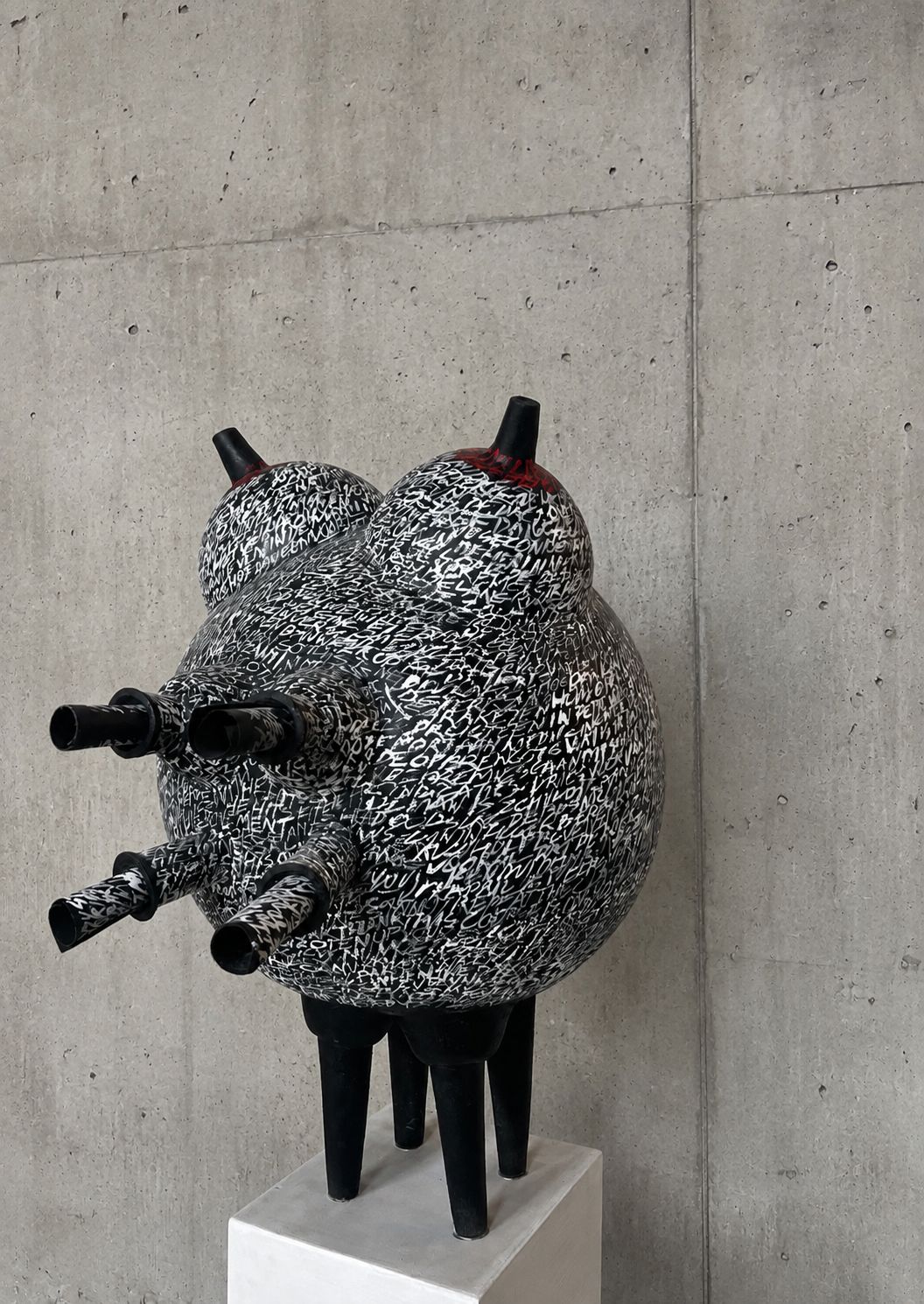
An exceptional ceramic sculpture by Dutch sculptor Dries Engelen, created in 1979 and later transformed through a remarkable artistic collaboration with his close friend, graphic artist Harry Marks.
Originally titled Spoetnik
(Sputnik), the sculpture remained unglazed in Engelen’s gallery for many years. Its spherical volumes, tubular protrusions and distinctive geometric construction reflect the artist’s sculptural language during his period of working in ceramics.
Engelen, who trained as a sculptor at the Jan van Eyck Academy in Maastricht, eventually invited Marks to decorate the piece. The two shared a longstanding friendship, a passion for billiards and a sense of humour. Known for his expressive handwriting and inventive graphic compositions, Marks saw something entirely different in the sculpture’s generous, rounded forms: the voluptuous women depicted by the Flemish Baroque painter Peter Paul Rubens.
Drawing inspiration from Rubens’ Women
, a poem by Nobel Prize-winning Polish poet Wisława Szymborska, Marks covered the black ceramic surface with densely arranged handwritten text in white and red. The poem explores the exuberance of the Baroque female form and the changing ideals of feminine beauty throughout history.
When the entire poem proved too long to fit onto the sculpture, Marks devised an ingenious and playful solution: handwritten rolls of paper inserted into the ceramic openings, extending the text beyond the surface of the object. According to Carla Engelen, the artist’s widow, this solution was a source of much amusement.
What began as a sculptural object with associations to space exploration ultimately became a highly individual work at the intersection of sculpture, graphic art and literature. Its original geometric form acquired an entirely new identity through Marks’ interpretation.
Rubens Vrouwen
is not only a striking example of Engelen’s ceramic oeuvre, but also a tangible testament to the creative dialogue, humour and enduring friendship between two artists.
The sculpture is accompanied by a handwritten version of the poem, in the Dutch translation by Gerard Rasch and a book featuring the art piece.